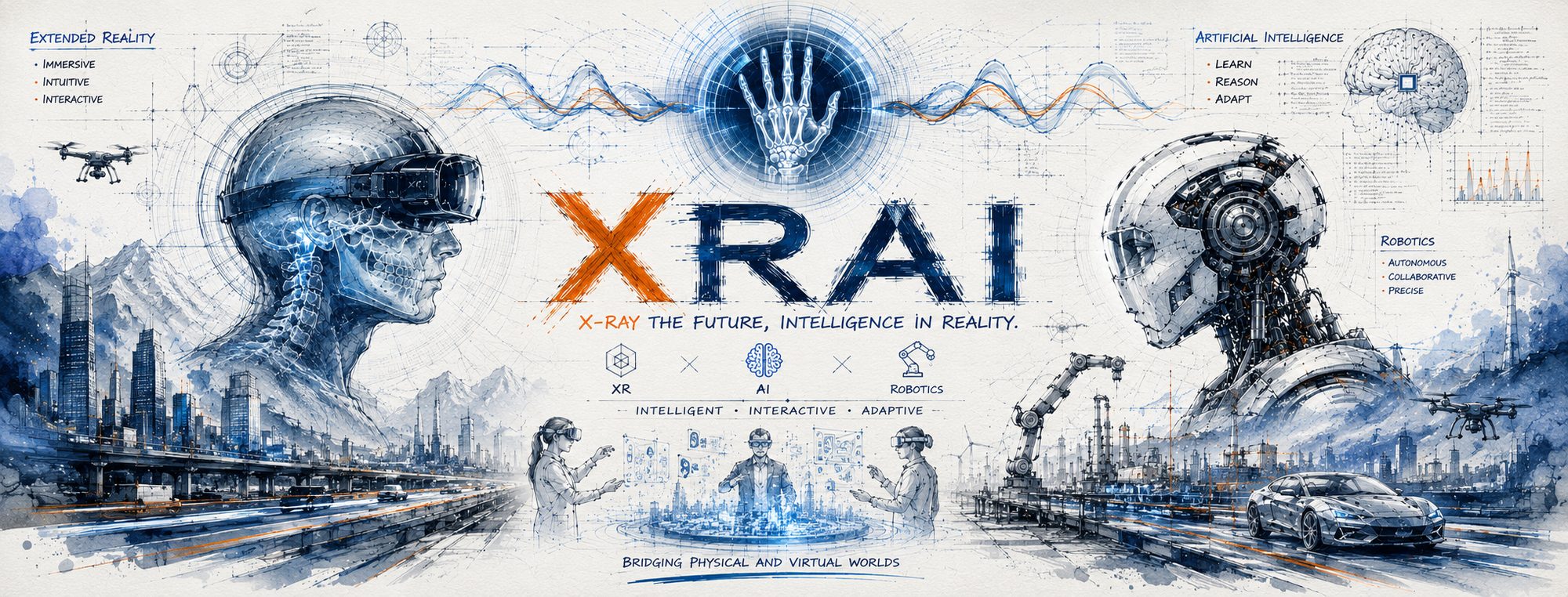
XRAI Lab
The Extended Reality, Artificial Intelligence, and Robotics (XRAI) Lab aims to advance the seamless integration of Extended Reality (XR), Artificial Intelligence (AI), and Robotics to create intelligent, interactive, and adaptive systems. Our research focuses on next-generation technologies that seamlessly bridge the physical and virtual worlds, enabling intuitive human–machine interaction, augmenting human capabilities, and supporting collaborative autonomy.
Through interdisciplinary innovation, the XRAI Lab redefines how intelligent systems are designed, experienced, and deployed across real-world applications, including advanced manufacturing, engineering education, and human-centered automation.
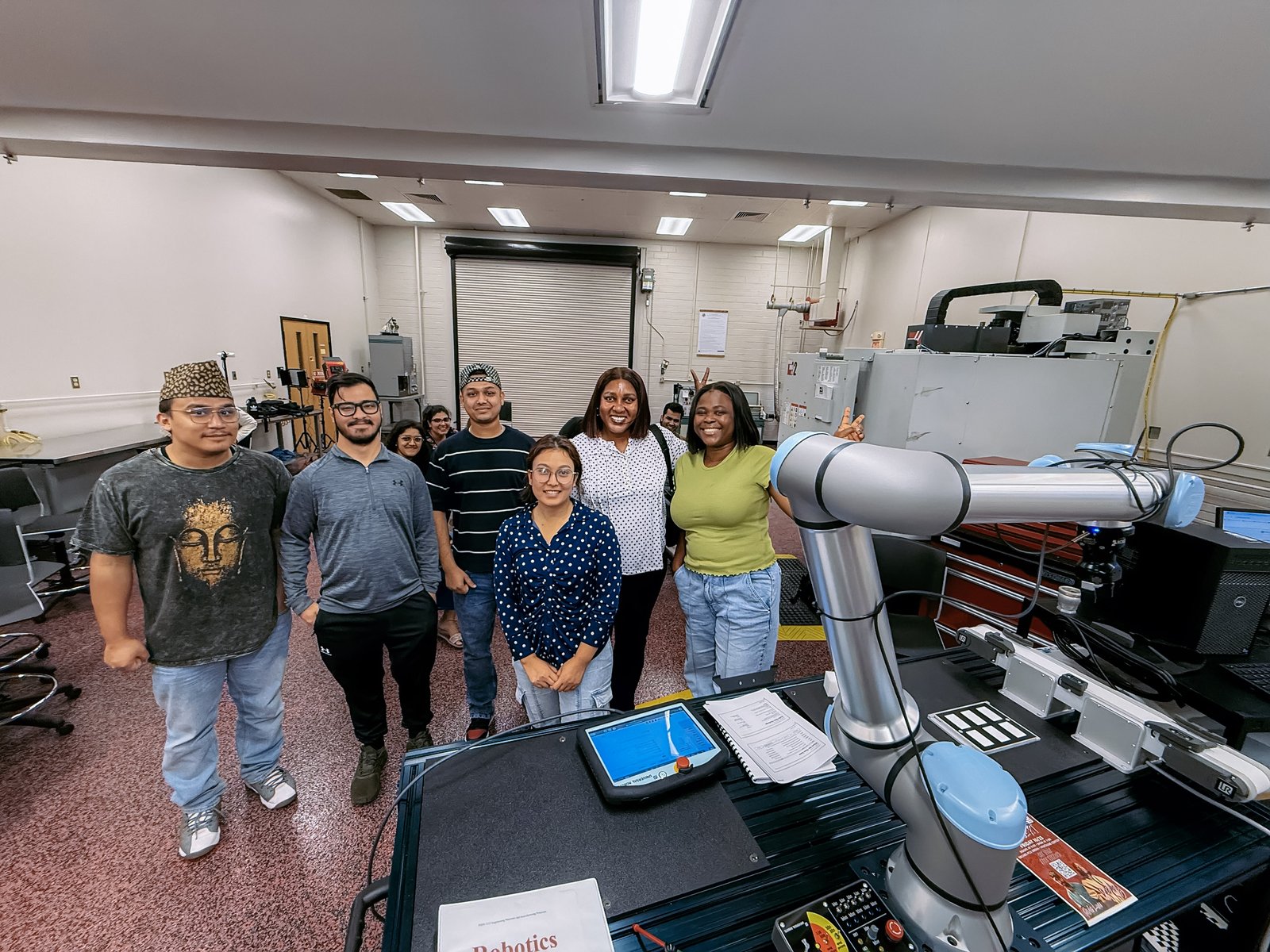
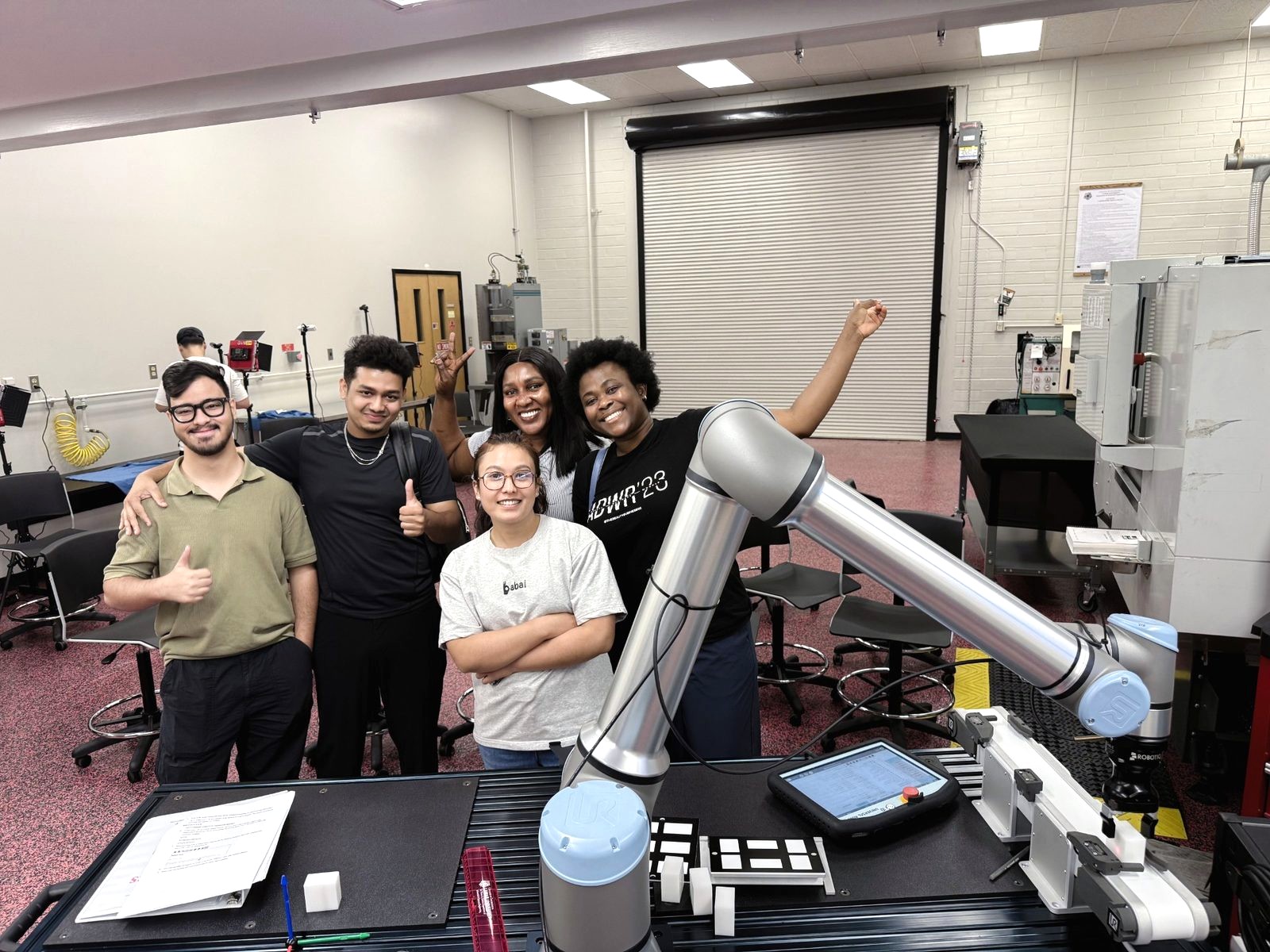
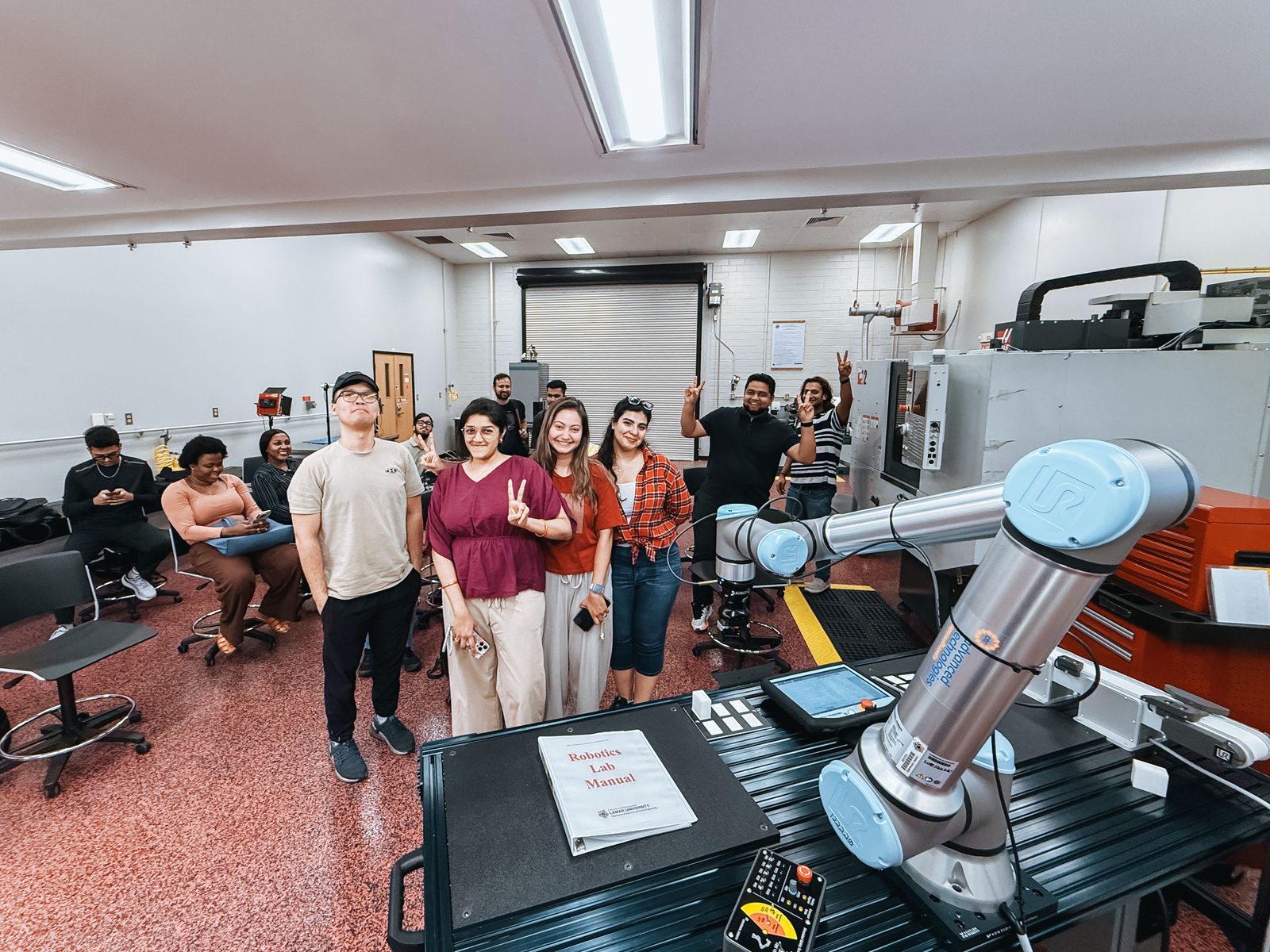
Research Focus

Human-Centered XR & AI
Studying how people perceive and interact within XR environments to design intuitive, cognitively-aware, AI-enhanced interfaces.
- Human-Centered AR HRI with Cognition Awareness
- Vertical-Horizontal Illusion Across Screens and XR Headsets
- Real-Time Object Detection for MR on Meta Quest 3S

Immersive Learning & Workforce Training
Designing and evaluating XR-based systems that accelerate skill acquisition, knowledge transfer, and workforce readiness across education and professional domains.
- VR Learning System with LLM-Powered Conversational Avatar
- MR Training for First Responders in Hurricane Scenarios
- AR Educational App for Newton's Cradle Physics

XR-Mediated Human-Robot Collaboration
Developing XR interfaces that enable natural, safe, and efficient communication between humans and robotic systems in complex real-world environments.
- AR-Based Human-Robot Interaction System
- Tele-Robot System with Mixed-Reality Interaction
- Human-Centered AR HRI with Cognition Awareness

Digital Twin & Intelligent Manufacturing
Integrating digital twin and AR technologies to build data-driven manufacturing environments with intelligent visualization, monitoring, and maintenance workflows.
- AR-Assisted Maintenance and Repair System
- AR Smart Factory Management System
- Global Calibration for VST AR Misregistration

Adaptive & Intelligent XR Systems
Building AI-driven XR pipelines that sense user context, adapt in real time, and deliver personalized interaction across rehabilitation, training, and industrial settings.
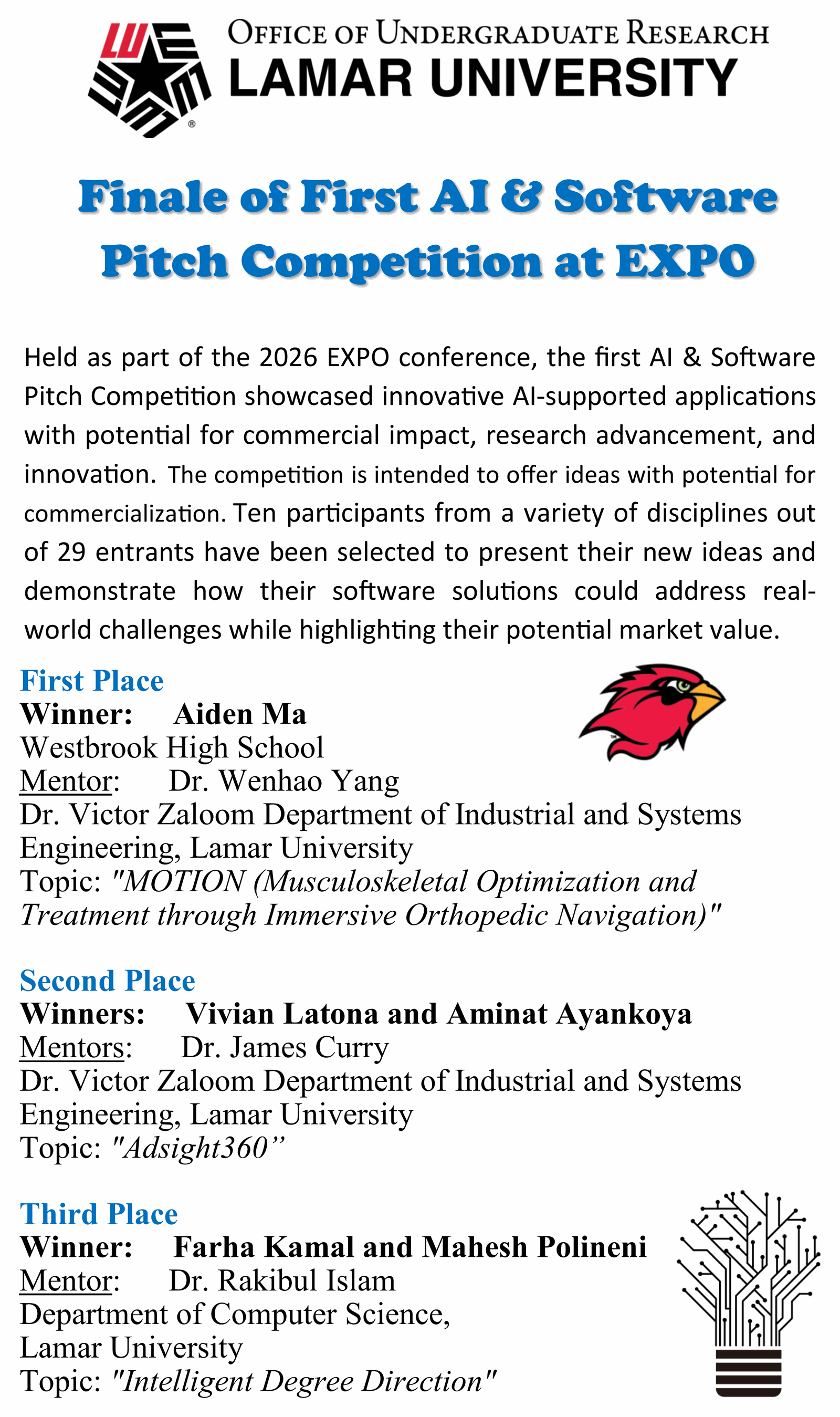
- MOTION: AI-Driven Motion Capture for AR Rehabilitation
- VR Learning System with LLM-Powered Conversational Avatar
- Real-Time Object Detection for MR on Meta Quest 3S
Team
Principal Investigator

Wenhao Yang
Assistant Professor
Dr. Victor A. Zaloom Department of Industrial and Systems Engineering
College of Engineering
Lamar University, 4400 MLK Blvd., PO Box 10009, Beaumont, Texas 77710
Office: Cherry Engineering Building, Room 2628 · Tel: 409-880-1891
Doctoral Students





Master’s Students

Undergraduate Researchers

Alumni
| Name | Degree | Duration | Thesis | Current Position |
|---|---|---|---|---|
| Rezwanul Ashraf Ruddro | M.S. Industrial Engineering | 2025 – 2026 | Development of an Immersive VR Learning System With LLM-Integrated Avatar for Educational Assistance | Continuing DE student at Lamar University |
| Muhammad Ilyas Mubarik | M.S. Industrial Engineering | 2024 – 2026 | Advanced Mixed Reality Training for First Responders in Hurricane Scenarios | Operations Tech II @ Amazon Data Center Engineering Operations |
Collaborators
Administrative Support
Heather Martindale is helping us (and other groups) with administration.
Join the Lab
We are recruiting students for two degree paths in Industrial Engineering at Lamar University:
- Doctor of Engineering (D.E.) in Industrial Engineering
- Master’s degree, thesis option
You will fit in well if you use AI tools in your work, can code, and have experience with any of Unity, ROS 2, Python, or user studies.
There are no funded (RA) positions at this time. Admission to either program goes through Lamar University’s graduate application.
If you would like to work with the XRAI Lab, email wenhao.yang@lamar.edu with:
- your CV, and
- a short description of a research idea you want to pursue — ideally connected to one of the research focus areas above.
Recent Research
Path Planning Using Industrial Robotics for Automation of Route-Based Vibration Data Collection
Route-based vibration data collection remains a manual task in industrial condition monitoring: technicians walk predefined equipment routes with portable collectors on weekly to quarterly schedules, which is labor-intensive and introduces operator-to-operator variability. This project develops an autonomous mobile robot platform that replicates the route definition and execution logic of commercial vibration analysis software. A TurtleBot 4 running ROS 2 is driven by a custom browser-based control panel (connected over rosbridge) that supports manual teleoperation, live SLAM mapping, waypoint capture, and grouping of waypoints into named, color-coded inspection routes with per-point wait, skip, and arrival-error parameters. Route order is optimized as a Traveling Salesman Problem using exact permutation search for small waypoint sets and a nearest-neighbor with 2-opt heuristic for larger ones, while navigation is executed through the Nav2 stack (Dijkstra-based global planning on an inflated costmap, DWB local control, and behavior-tree recovery). The system logs arrival error at every measurement point, captures a camera snapshot on arrival, and exports per-route results to Excel. Validation in a controlled indoor environment demonstrates repeatable multi-route execution and provides the navigation foundation for mounting a vibration sensing payload.
Equipment

Collaborative Robot
Universal Robots UR10e
Description
A 6-DOF collaborative robot arm with a 12.5 kg payload, 1300 mm reach, and a force/torque sensor built into the tool flange. It anchors our robot cell for teaching and research in collaborative automation.
Accessories (7)
- WINGMAN Cobot Tool Changer · TripleA Robotics
- Screwdriving Solution · Robotiq
- EPick Vacuum Gripper · Robotiq
- 2F-85 Adaptive Gripper · Robotiq
- Wrist Camera · Robotiq
- Academy Hardware Set · Universal Robots
- nanoScan3 Core Safety Laser Scanners · SICK

Collaborative Robot
UFACTORY xArm 6
Description
A lightweight 6-DOF collaborative robot arm with a 5 kg payload, 700 mm reach, and ±0.1 mm repeatability, fully open to programming from Python and ROS 2. It is our platform for research in human-centered robotics, perception-driven manipulation, and immersive human-robot interaction.
Accessories (3)
- X-Arm Gripper · UFACTORY
- X-Arm Camera Stand · UFACTORY
- Gemini 335 Depth Camera · Orbbec
Desktop Robot Arm
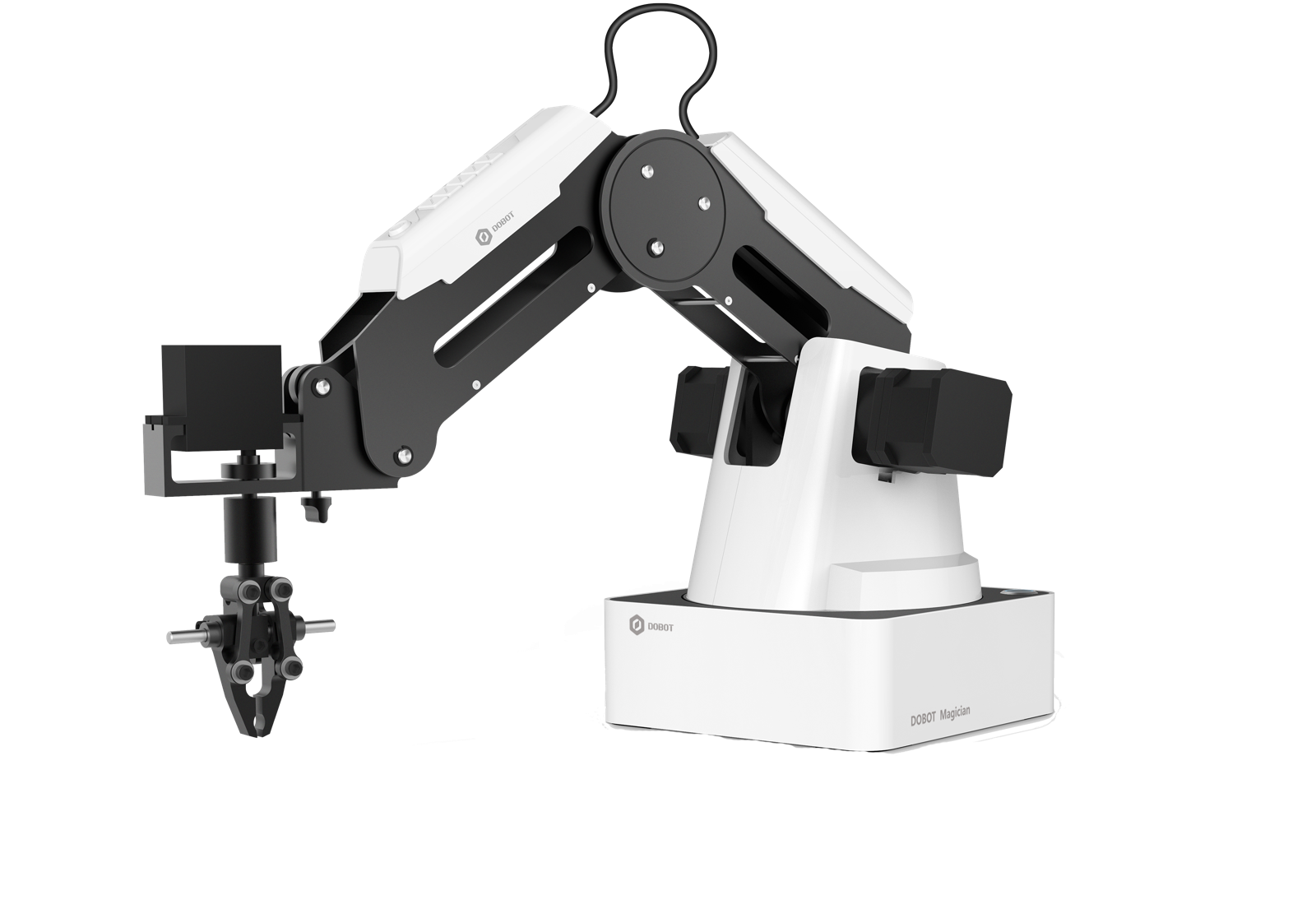
Dobot Magician Robotic Arm
Description
A 4-axis desktop robot arm for teaching, with a 500 g payload, 320 mm reach, and ±0.2 mm repeatability. The lab has ten units, enough for a full class lab. Students swap its tools to pick and place with suction or a gripper, write and draw, and 3D print, and program it in blocks or Python.
Accessories (1)
- Standard Edition Tool Kit · Dobot

Mobile Manipulator
Clearpath Husky A300 with Robot Arm
Description
A rugged, all-terrain unmanned ground vehicle (UGV) for autonomous mobile robotics research: IP54-rated, up to 2 m/s, and able to climb 30° grades, running ROS 2 Jazzy. With a robot arm on its top plate, the platform supports mobile manipulation tasks that combine navigation and object interaction in complex environments.
Accessories (2)
- Gen3 lite Robot Arm · Kinova
- RealSense D435 Depth Camera · Intel
Mobile Robot
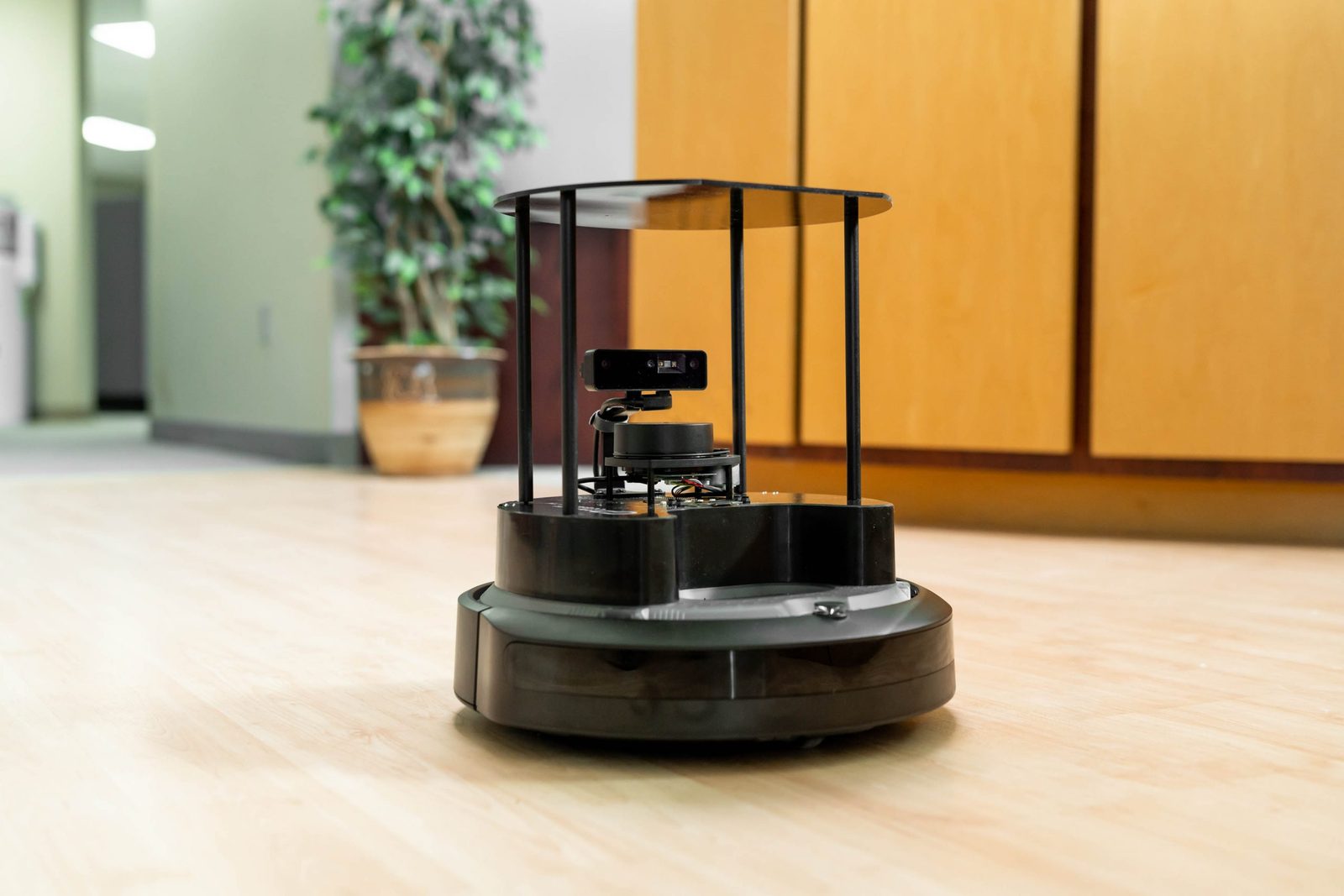
Clearpath TurtleBot 4
Description
A ROS 2 mobile robot for education and research, built on the iRobot Create 3 base with a Raspberry Pi 4B on board. It maps its surroundings, navigates autonomously, and runs AI models on its camera, with a 9 kg payload and 2.5–4 hours of operation per charge.
Accessories (2)
- OAK-D Pro Camera · Luxonis
- RPLIDAR A1M8 · Slamtec

XR station
Virtualis MotionVR Station
Description
An advanced balance assessment and rehabilitation platform that integrates a 360-degree dynamic force plate with immersive virtual reality. The system enables precise evaluation of human balance and postural control through Computerized Dynamic Posturography (CDP), including standardized tests such as the Sensory Organization Test (SOT), Limits of Stability (LoS), and the Adaptation Test (ADT).

XR Headset
Varjo VR-3
Description
A tethered PC VR headset built for ultra-high-fidelity immersive experiences, with a 115° field of view and human-eye resolution at the center of view. Its integrated 200 Hz eye tracking enables highly realistic rendering and detailed analysis of where users look.
XR Headset
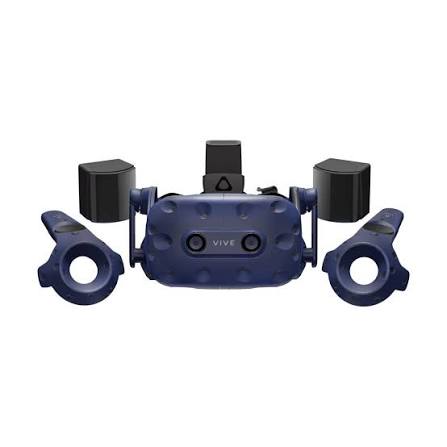
HTC VIVE Pro
Description
A tethered PC VR headset tracked by SteamVR base stations, with 1440 × 1600 pixels per eye, a 90 Hz refresh rate, and a 110° field of view. Paired with VIVE Trackers, it brings real objects and body movement into VR for interaction and motion-tracking studies.
Accessories (1)
- VIVE Tracker (3.0) · HTC
XR Headset
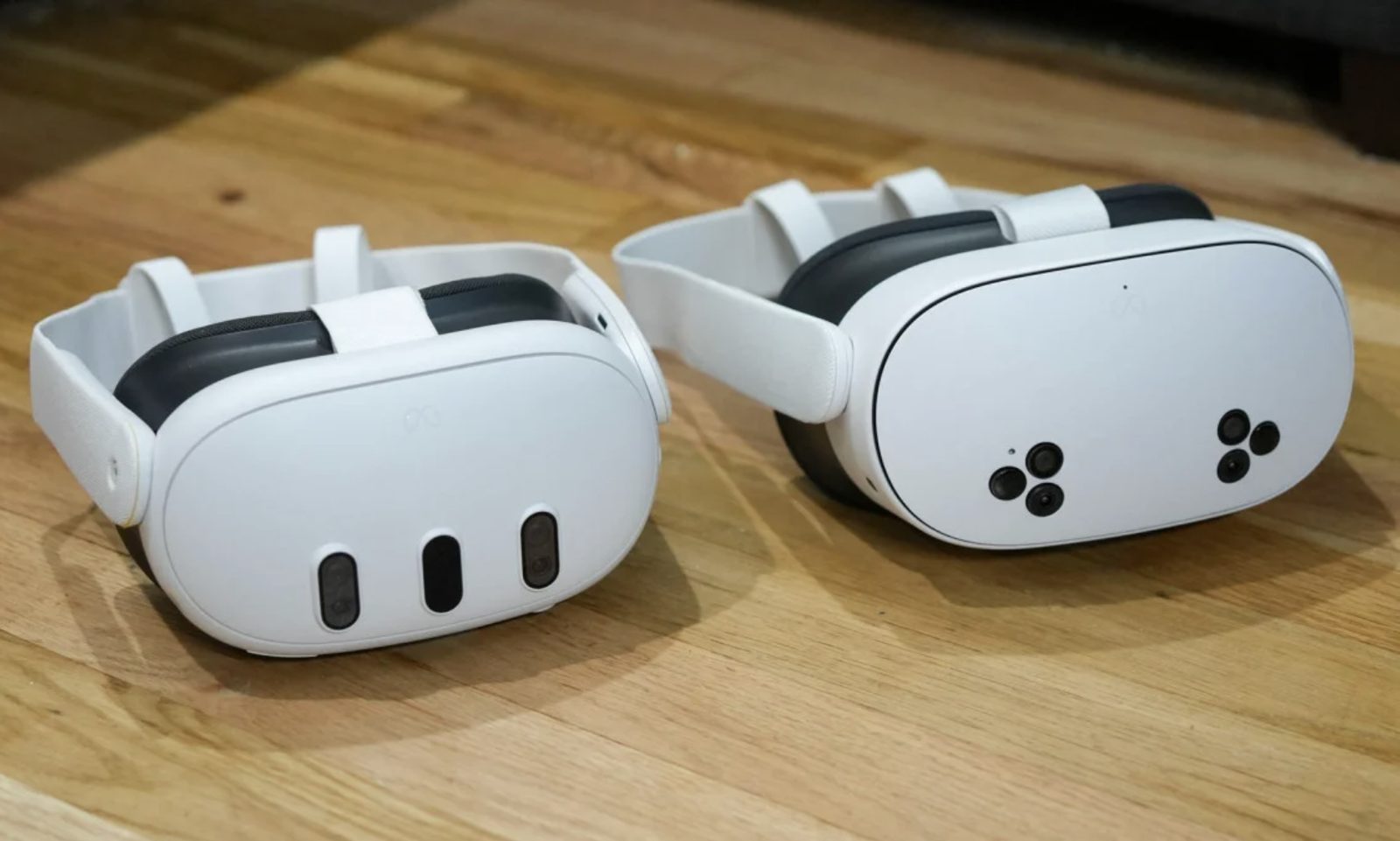
Meta Quest 3 & 3S
Description
The Meta Quest 3 and Quest 3S are standalone mixed reality headsets that support both fully immersive VR and passthrough-based AR experiences. With inside-out tracking and wireless operation, they provide a flexible and accessible platform for developing and deploying interactive XR applications.
Depth Camera
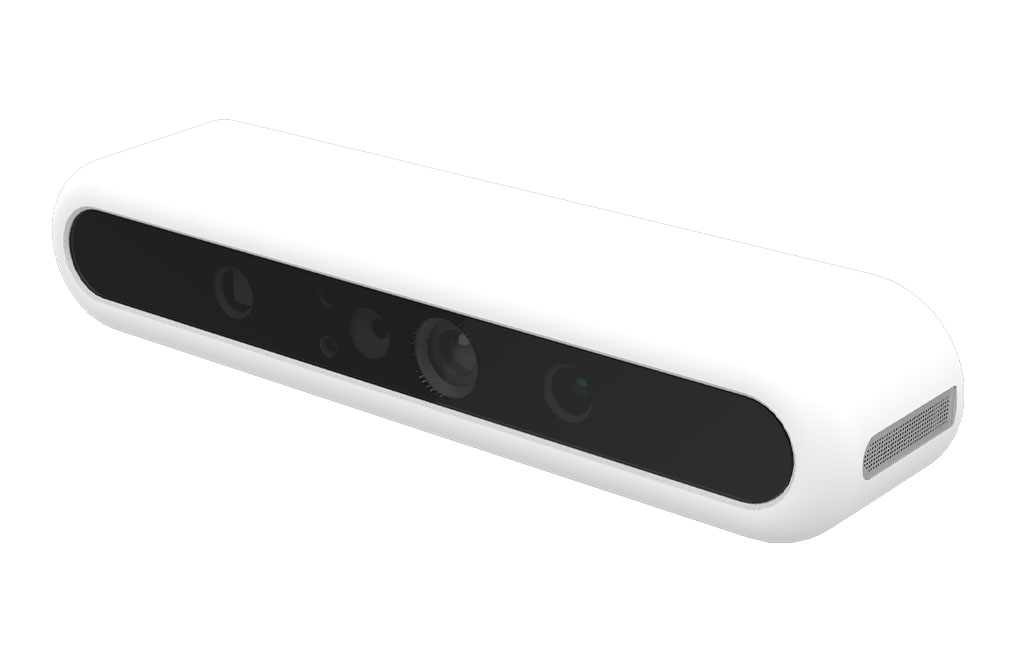
Orbbec Astra+ 3D Camera
Description
A structured-light RGB-D camera for indoor scenes, with stable depth from 0.6 to 8 m, precision within 0.3% at 1 m, and 1080p color. The lab has three units. It suits fixed, indoor setups such as watching a workspace or a robot cell from a stand.
Depth Camera
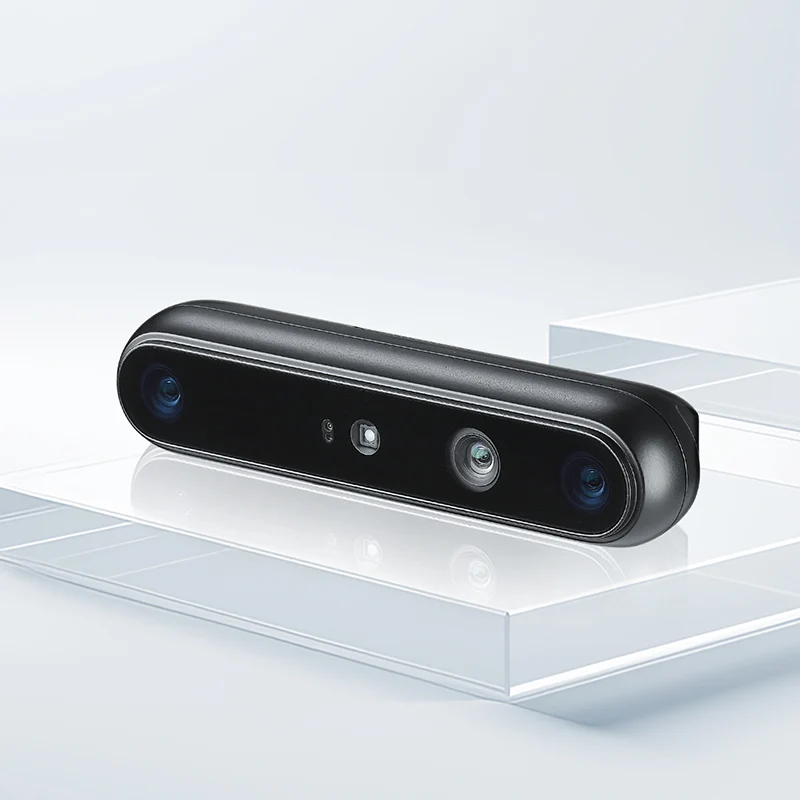
Orbbec Gemini 335L
Description
An IP65-rated stereo depth camera with a 95 mm baseline, working indoors or outdoors with an optimal depth range of 0.25 to 6 m and a built-in IMU. Its wide 90° depth field of view and rugged housing suit cameras mounted on mobile robots and arms.